
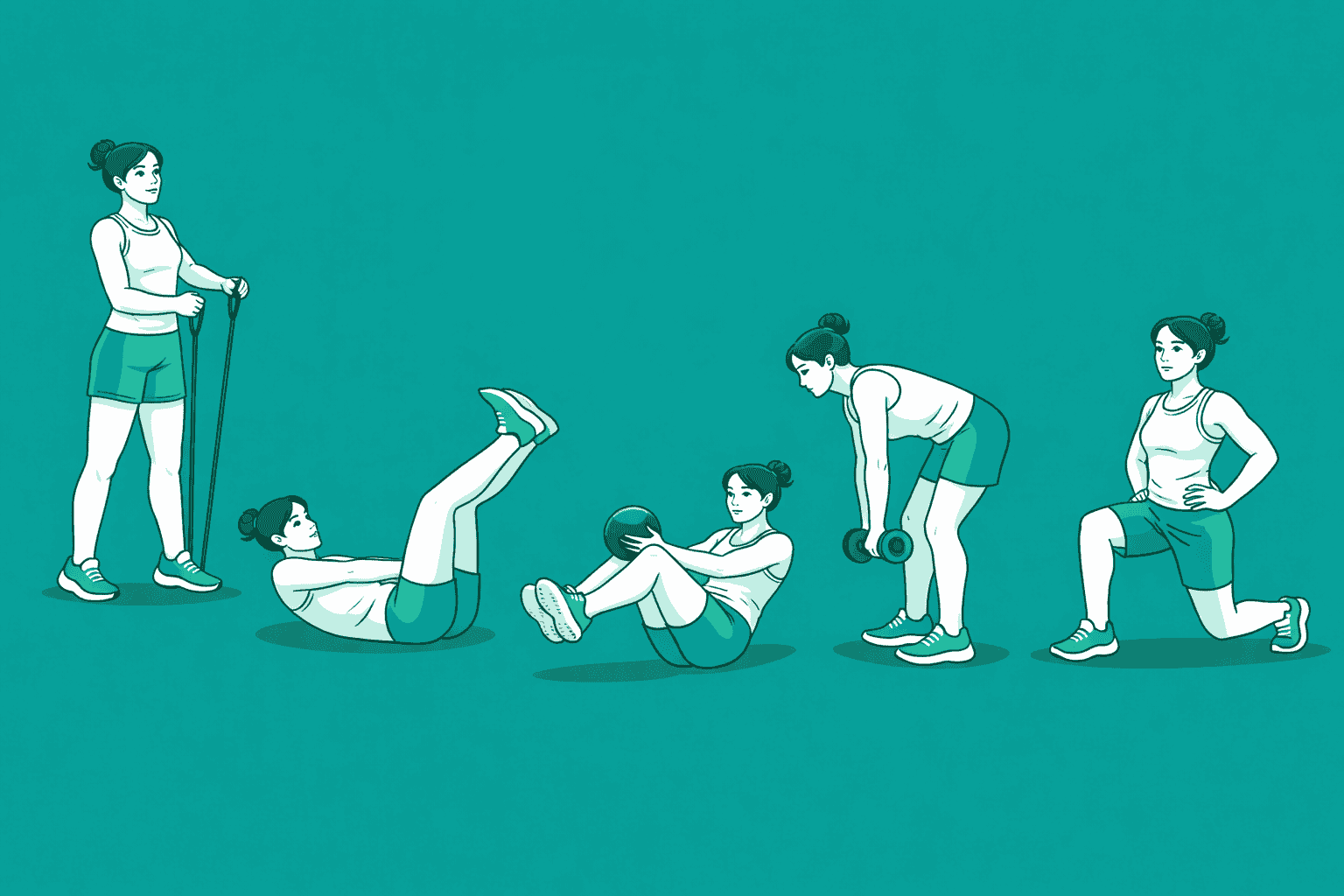
Looking to expand your fitness routine? This guide covers 25+ exercises that start with R to help you build strength, improve flexibility, and boost your overall health with diverse workout options.
Exercise That Starts With R includes running, rowing, resistance training, rope jumping, and many more activities. These exercises target different muscle groups and fitness goals for complete body development.
Whether you’re a beginner or experienced athlete, these R exercises offer something for everyone. Let’s explore each exercise with proper techniques and benefits to enhance your fitness journey today.
Table of Contents
- 1. Running
- 2. Rowing
- 3. Resistance Training
- 4. Rope Jumping
- 5. Russian Twists
- 6. Reverse Lunges
- 7. Reverse Crunches
- 8. Renegade Rows
- 9. Recumbent Bike
- 10. Rollouts
- 11. Rock Climbing
- 12. Reverse Flyes
- 13. Resistance Band Exercises
- 14. Romanian Deadlifts
- 15. Reverse Plank
- 16. Racquetball
- 17. Ruck March
- 18. Ring Rows
- 19. Reverse Curls
- 20. Roll Ups
- 21. Rower Sprints
- 22. Reverse Hyperextensions
- 23. Rugby
- 24. Rucking
- 25. Rebounding
- 26. Resistance Band Pull Aparts
- FAQ’s
- Conclusion
1. Running
Running is one of the most popular exercises worldwide. It’s a natural movement that requires no special equipment except good shoes.
Benefits of Running
- Burns calories quickly
- Strengthens your heart
- Improves lung capacity
- Boosts mental health
- Builds leg muscles
How to Start
Begin with short distances at a comfortable pace. Warm up for 5 minutes before running. Keep your body upright and arms relaxed. Breathe naturally through your nose and mouth.
Tips for Beginners
Start with 15 to 20 minutes, three times per week. Gradually increase your time and distance. Always wear proper running shoes to protect your joints.
2. Rowing
Rowing is a full body workout that mimics the motion of rowing a boat. You can do it on a rowing machine or in actual water.
Muscles Worked
- Back muscles
- Arm muscles
- Leg muscles
- Core muscles
- Shoulder muscles
Proper Form
Sit with your knees bent and grab the handle. Push with your legs first, then pull the handle to your chest. Extend your arms and bend your knees to return to starting position.
Why Rowing Works
This exercise combines cardio and strength training. It’s low impact on your joints but highly effective for fitness.
3. Resistance Training
Resistance training uses weights or bands to build muscle strength. It’s essential for overall fitness and bone health.
Types of Resistance
- Free weights like dumbbells
- Resistance bands
- Weight machines
- Body weight exercises
- Cable machines
Getting Started
Choose weights you can lift 8 to 12 times. Focus on proper form over heavy weights. Rest 48 hours between working the same muscle groups.
Key Benefits
Builds lean muscle mass, increases metabolism, strengthens bones, and improves posture and balance.
4. Rope Jumping
Rope jumping, also called jump rope, is a simple cardio exercise. It’s fun, portable, and burns lots of calories.
What You Need
Just a jump rope and flat surface. Choose a rope that reaches your armpits when you stand on the middle.
Basic Technique
- Hold handles at hip level
- Keep elbows close to body
- Turn rope with wrists
- Jump with both feet
- Land softly on toes
Workout Ideas
Start with 30 seconds of jumping, then rest. Repeat 5 to 10 times. As you improve, increase your jumping time.
5. Russian Twists
Russian twists target your core muscles, especially your obliques. This exercise helps create a strong and stable midsection.
How to Perform
Sit on the floor with knees bent. Lean back slightly and lift your feet off the ground. Hold your hands together and twist your torso from side to side.
Make It Harder
Hold a weight, medicine ball, or water bottle. Keep your feet elevated throughout the movement. Move slowly and with control.
Common Mistakes to Avoid
Don’t move too fast. Keep your back straight, not rounded. Focus on rotating your torso, not just your arms.
6. Reverse Lunges
Reverse lunges are safer for your knees than forward lunges. They build strong legs and improve your balance.
Step by Step Guide
- Stand with feet hip width apart
- Step one foot backward
- Lower your back knee toward floor
- Push through front heel to return
- Repeat with other leg
Muscles Targeted
Quadriceps, hamstrings, glutes, and core muscles all work during this exercise.
Progression Options
Add dumbbells in each hand. Increase your range of motion. Try adding a knee lift at the top.
7. Reverse Crunches
Reverse crunches focus on your lower abdominal muscles. They’re easier on your neck than regular crunches.
Proper Execution
Lie on your back with knees bent. Lift your hips off the floor and bring knees toward chest. Lower back down with control.
Form Tips
- Keep movements slow
- Don’t swing your legs
- Press lower back into floor
- Breathe out as you lift
- Breathe in as you lower
Why They Work
This exercise isolates lower abs better than traditional crunches. It also protects your spine and neck.
8. Renegade Rows
Renegade rows combine a plank position with rowing movements. This advanced exercise builds total body strength.
Equipment Needed
Two dumbbells with flat sides work best. Start with light weights until you master the form.
How to Do It
Get in plank position with hands on dumbbells. Keep your body stable and row one dumbbell to your hip. Lower it down and repeat on the other side.
Core Engagement
Keep your hips level and don’t rotate your body. Your core must work hard to keep you stable.
9. Recumbent Bike
A recumbent bike has a reclined seat with back support. It’s gentler on your back and joints than upright bikes.
Benefits
- Low impact cardio
- Comfortable seating
- Good for back problems
- Easy to read or watch TV
- Safe for seniors
Using It Right
Adjust the seat so your leg almost straightens at the furthest pedal point. Start with 15 to 20 minutes. Gradually increase time and resistance.
Who Should Use It
Great for people with back pain, knee issues, or balance problems. Also perfect for recovery workouts.
10. Rollouts
Rollouts use an ab wheel or stability ball to strengthen your core. This is a challenging exercise that requires good control.
What You Need
An ab wheel, barbell with plates, or stability ball. Start on your knees before trying from your feet.
Technique Breakdown
- Kneel on a mat with wheel in front
- Hold handles with straight arms
- Roll forward slowly
- Go as far as you can control
- Pull back to starting position
Safety First
Don’t let your lower back sag. Keep your core tight throughout. Start with small movements and build up slowly.
11. Rock Climbing
Rock climbing is a full body workout that builds strength and problem solving skills. You can climb indoors or outdoors.
Physical Benefits
- Builds upper body strength
- Strengthens grip and forearms
- Improves flexibility
- Enhances balance
- Burns many calories
Getting Started
Join an indoor climbing gym for beginners. Take a basic class to learn safety and techniques. Start with easy routes and progress gradually.
Mental Benefits
Climbing improves focus, reduces stress, and builds confidence as you complete challenging routes.
12. Reverse Flyes
No, that’s not the format. Mention every exercise with the number. Also use the best and simple format so that everyone can understand.
Reverse flyes target your upper back and rear shoulder muscles. This exercise helps improve posture and shoulder health.
How to Perform
Bend forward at your hips with dumbbells in hands. Keep a slight bend in your elbows. Raise your arms out to the sides until they’re parallel to the floor. Lower back down slowly.
Key Points
- Keep back straight
- Don’t use momentum
- Focus on squeezing shoulder blades
- Use light weights
- Control the movement
Why It Matters
Strong rear delts balance out chest muscles. This prevents rounded shoulders and reduces injury risk.
13. Resistance Band Exercises
Resistance bands are stretchy bands that provide resistance for strength training. They’re affordable, portable, and effective.
Types of Bands
- Loop bands
- Tube bands with handles
- Therapy bands
- Figure 8 bands
- Pull up assist bands
Popular Band Exercises
You can do squats, chest press, rows, bicep curls, and shoulder press with bands. They work for almost any muscle group.
Advantages
Bands are easy on joints, perfect for travel, and suitable for all fitness levels. They provide constant tension throughout movements.
14. Romanian Deadlifts
Romanian deadlifts focus on your hamstrings and glutes. This exercise improves hip hinge movement patterns.
Step by Step
- Hold barbell or dumbbells at thighs
- Keep knees slightly bent
- Push hips back as you lower weight
- Feel stretch in hamstrings
- Return to standing by pushing hips forward
Form Essentials
Keep your back flat, not rounded. The weight stays close to your legs. Don’t bend your knees more as you lower down.
Common Uses
Athletes use this for explosive power. It’s also great for strengthening your posterior chain and preventing back pain.
15. Reverse Plank
The reverse plank strengthens your back body, including glutes, back, and shoulders. It’s the opposite of a regular plank.
How to Do It
Sit with legs extended and hands behind you. Press through your hands and lift your hips up. Keep your body in a straight line from head to heels.
Hold Time
Start with 10 to 15 seconds. Work up to 30 to 60 seconds as you get stronger. Focus on keeping hips lifted.
Benefits
- Opens up chest and shoulders
- Strengthens glutes and hamstrings
- Improves posture
- Builds core stability
- Balances regular plank work
16. Racquetball
Racquetball is a fast paced indoor sport played with a racquet and ball. It provides excellent cardio and agility training.
What It Works
- Cardiovascular endurance
- Quick reflexes
- Hand eye coordination
- Leg power and speed
- Full body conditioning
Getting Started
Find a local court at a gym or recreation center. You need a racquet, protective eyewear, and a ball. Take a beginner lesson to learn the rules.
Fitness Value
Games are intense and burn 400 to 600 calories per hour. The constant movement builds stamina and explosive strength.
17. Ruck March
Ruck marching means walking with a weighted backpack. This military style exercise builds endurance and mental toughness.
How to Start
Use a sturdy backpack with 10 to 20 pounds. Start with short distances like 1 to 2 miles. Walk at a steady pace on flat ground.
Proper Setup
- Pack weight evenly
- Wear supportive boots or shoes
- Keep pack high on back
- Use hip belt if available
- Maintain good posture
Progressive Training
Gradually add weight and distance over weeks. This exercise prepares you for hiking and improves overall fitness.
18. Ring Rows
Ring rows use gymnastics rings for a challenging upper body pull exercise. They’re adjustable for all fitness levels.
Setup Instructions
Hang rings at chest height. Hold rings and walk feet forward. The more horizontal your body, the harder the exercise.
Movement Pattern
Pull your chest to the rings while keeping body straight. Squeeze shoulder blades together at the top. Lower yourself down with control.
Why Use Rings
The instability of rings forces your core and stabilizer muscles to work harder than a bar.
19. Reverse Curls
Reverse curls work your forearms and the top of your biceps. This grip variation builds balanced arm strength.
How to Perform
Hold a barbell or dumbbells with palms facing down. Keep elbows at your sides. Curl the weight up toward your shoulders. Lower back down slowly.
Key Differences
The overhand grip shifts focus to your forearms and brachialis muscle. Use lighter weight than regular curls.
Benefits
- Stronger grip strength
- Bigger forearms
- Reduces elbow pain
- Improves pulling exercises
- Balances arm development
20. Roll Ups
Roll ups are a Pilates exercise that strengthens your entire core. They require control and flexibility.
Step by Step
- Lie flat with arms overhead
- Lift arms toward ceiling
- Curl up slowly, one vertebra at a time
- Reach toward your toes
- Roll back down with control
Tips for Success
Move slowly and smoothly. Don’t use momentum to swing up. Keep your abs engaged throughout the entire movement.
Modifications
Bend your knees if you can’t keep legs straight. Use a resistance band around your feet for assistance.
21. Rower Sprints
Rower sprints are short, intense bursts on the rowing machine. They build power and cardiovascular fitness quickly.
How to Structure
Row as hard as possible for 20 to 30 seconds. Rest for 1 to 2 minutes. Repeat 5 to 10 times depending on fitness level.
Proper Technique
Focus on powerful leg drives. Pull the handle explosively to your chest. Maintain good form even when tired.
Training Benefits
Sprint intervals boost metabolism, improve anaerobic capacity, and build fast twitch muscle fibers efficiently.
22. Reverse Hyperextensions
Reverse hyperextensions strengthen your glutes, hamstrings, and lower back. They’re done on a special machine or bench.
How to Perform
Lie face down on the bench with hips at the edge. Let legs hang down. Lift your legs up until body forms a straight line. Lower back down slowly.
Important Notes
- Don’t hyperextend too far
- Keep movement controlled
- Focus on glute squeeze
- Start with body weight
- Add ankle weights later
Why Do Them
This exercise is easier on your spine than regular back extensions. It’s great for lower back health and glute development.
23. Rugby
Rugby is a contact team sport that provides intense full body conditioning. It combines running, tackling, and strategic play.
Physical Demands
- Cardiovascular endurance
- Upper and lower body strength
- Speed and agility
- Power for tackles
- Mental toughness
Fitness Benefits
Rugby players develop explosive power, strong core muscles, and excellent conditioning. Games provide interval training naturally through play patterns.
Getting Involved
Look for local clubs or recreational leagues. Many offer beginner friendly programs and social rugby options.
24. Rucking
Rucking is walking or hiking with a weighted backpack. It’s simpler than ruck marching and great for everyday fitness.
Why People Love It
It’s low impact, can be done anywhere, and burns more calories than regular walking. You can ruck around your neighborhood or on trails.
Beginner Guidelines
Start with 10 pounds in your backpack. Walk for 20 to 30 minutes at comfortable pace. Focus on maintaining good posture throughout.
Building Up
Add 5 pounds every few weeks. Increase distance before adding more weight. This prevents injury and builds steady progress.
25. Rebounding
Rebounding means exercising on a mini trampoline. This low impact workout is fun and easy on your joints.
Health Benefits
- Improves lymphatic drainage
- Low impact cardio
- Strengthens bones
- Improves balance
- Fun and engaging
Simple Exercises
You can jog in place, do jumping jacks, or simply bounce. Even gentle bouncing provides health benefits and movement.
Who Should Try It
Great for people with joint issues, seniors, and anyone wanting a fun home workout. It’s also good for recovery days.
26. Resistance Band Pull Aparts
This simple exercise uses a resistance band to strengthen your upper back and shoulders. It’s perfect for improving posture.
How to Do It
Hold a resistance band with both hands at chest level. Keep arms straight and pull the band apart until arms are out to sides. Return slowly to start.
Key Benefits
Strengthens rear delts and upper back muscles. Helps fix rounded shoulders from sitting. Takes only a few minutes daily.
When to Do Them
Great as a warm up before upper body workouts. Also perfect as a quick break during desk work to reduce shoulder tension.
FAQ’s
Running and rope jumping are excellent for beginners. They require minimal equipment, are easy to learn, and can be adjusted to any fitness level.
Yes, resistance training builds muscle which increases your metabolism. This helps your body burn more calories throughout the day, even when resting.
Perform Russian twists 2 to 3 times per week. Allow rest days between sessions for muscle recovery. Start with 3 sets of 10 to 15 repetitions.
Both are excellent cardio exercises. Rowing is lower impact and works more muscle groups. Running is more accessible and requires less equipment. Choose what you enjoy.
You only need resistance bands, which are affordable and portable. Choose bands with different resistance levels. No other equipment is necessary to start training effectively.
Conclusion
These 25+ Exercise That Starts With R offer something for everyone, from beginners to advanced fitness enthusiasts. Whether you prefer cardio like running and rowing, strength work like resistance training and reverse lunges, or fun activities like rebounding and racquetball, you have plenty of options to choose from.
Start with exercises that match your current fitness level. Focus on proper form and gradually increase intensity over time. Mix different exercises to keep your workouts interesting and target all muscle groups.
Remember, consistency matters more than perfection. Pick a few exercises from this list and start today. Your fitness journey begins with that first step.

Ajay Rathod is a fitness enthusiast with several years of hands-on experience in home workouts, strength training, and beginner fitness programs. He researches evidence-based fitness practices and simplifies them for everyday people.