
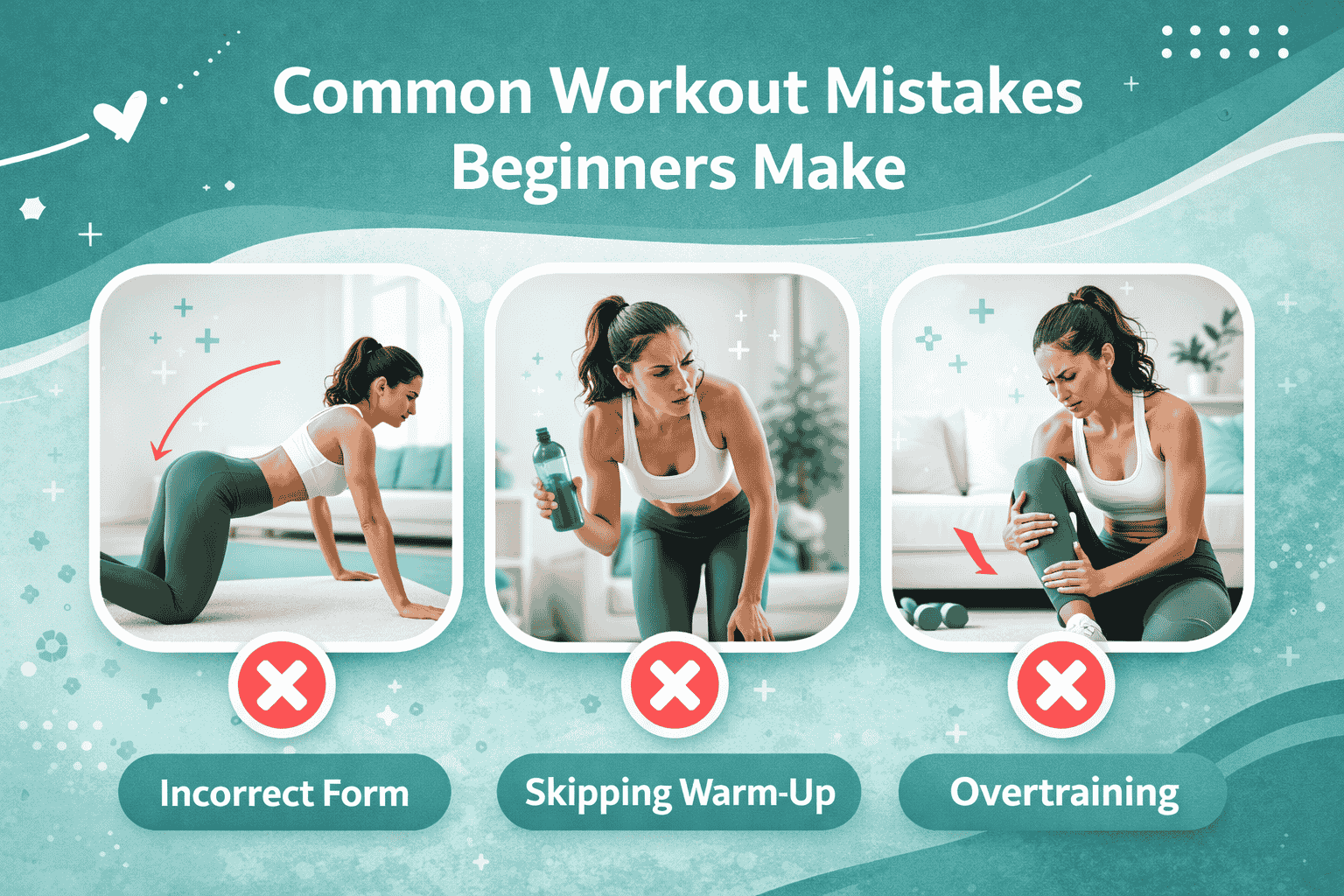
Starting a fitness journey is exciting! You have fresh energy, new goals, and big dreams. But many beginners make simple mistakes that slow down their progress or lead to injuries.
The good news? These workout mistakes beginners make are easy to fix once you know what to look for.
This guide will help you avoid the most common pitfalls and set you up for success from day one.
1. Skipping the Warm Up
The Mistake:
Jumping straight into heavy exercise without preparing your body first.
Why It Matters:
Cold muscles are tight and more likely to get injured. Your heart also needs time to adjust to increased activity.
The Fix:
Spend 5 to 10 minutes warming up before every workout. Try light cardio like walking or jogging in place. Add some arm circles, leg swings, and gentle stretches. Your body will thank you!
2. Doing Too Much Too Soon
The Mistake:
Working out for hours every day right from the start or lifting weights that are too heavy.
Why It Matters:
Your body needs time to adapt. Overtraining leads to burnout, extreme soreness, and injuries.
The Fix:
Start small and build slowly. Three to four workouts per week is perfect for beginners. Increase intensity by about 10% each week. Remember, fitness is a marathon, not a sprint.
3. Using Bad Form
The Mistake:
Performing exercises incorrectly because you’re copying what you see or trying to lift heavier weights.
Why It Matters:
Poor form puts stress on the wrong muscles and joints. This can cause serious injuries over time.
The Fix:
Learn the correct technique first, even if it means using lighter weights. Watch tutorial videos, work with a trainer for a few sessions, or ask gym staff for help. Quality always beats quantity.
4. Ignoring Rest Days
The Mistake:
Thinking that more workouts equal faster results, so you train every single day.
Why It Matters:
Muscles grow and repair during rest, not during the workout itself. Without rest, you risk injury and exhaustion.
The Fix:
Schedule at least one or two rest days each week. On rest days, you can do light activities like walking or gentle yoga. Sleep is also crucial, aim for 7 to 9 hours per night.
5. Forgetting About Nutrition
The Mistake:
Exercising regularly but eating poorly or not eating enough to fuel your workouts.
Why It Matters:
Your body needs proper fuel to perform and recover. No amount of exercise can make up for a bad diet.
The Fix:
Eat balanced meals with protein, healthy fats, and complex carbs. Stay hydrated throughout the day. Have a light snack before workouts and eat protein after exercise to help muscles recover.
6. Not Tracking Progress
The Mistake:
Doing random workouts without any plan or record of what you’re doing.
Why It Matters:
Without tracking, you can’t see improvements or know when to increase difficulty. This leads to plateaus.
The Fix:
Keep a simple workout journal or use a fitness app. Write down exercises, weights, reps, and how you felt. Review it weekly to see your progress and adjust your plan.
7. Comparing Yourself to Others
The Mistake:
Feeling discouraged because you can’t do what more experienced people can do.
Why It Matters:
Everyone starts somewhere. Comparison steals your joy and can push you to do exercises you’re not ready for.
The Fix:
Focus on your own journey. Celebrate small wins like adding one more rep or feeling stronger. The only person you should compare yourself to is the person you were yesterday.
8. Skipping the Cool Down
The Mistake:
Finishing your last exercise and immediately leaving without cooling down.
Why It Matters:
Your heart rate and body temperature need to gradually return to normal. Skipping this can cause dizziness and increases muscle soreness.
The Fix:
Spend 5 to 10 minutes cooling down after each workout. Do light walking and gentle stretching. Focus on the muscles you just worked. This helps flexibility and recovery.
9. Only Doing Cardio or Only Lifting Weights
The Mistake:
Sticking to just one type of exercise because it’s what you enjoy or what seems easier.
Why It Matters:
A balanced fitness routine includes both cardio for heart health and strength training for muscles and bones. Doing only one limits your overall fitness.
The Fix:
Mix it up! Do cardio workouts 2 to 3 times per week and strength training 2 to 3 times per week. This combination gives you the best results and keeps things interesting.
10. Not Listening to Your Body
The Mistake:
Pushing through real pain because you think “no pain, no gain” means you should ignore all discomfort.
Why It Matters:
There’s a difference between the burn of working muscles and pain from injury. Ignoring pain signals can turn minor issues into serious problems.
The Fix:
Learn the difference between good discomfort and bad pain. Muscle fatigue is normal. Sharp pain, joint pain, or pain that doesn’t go away is not. Stop and rest if something feels wrong.
11. Being Inconsistent
The Mistake:
Working out intensely for a week or two, then stopping for a month, then starting again.
Why It Matters:
Fitness requires consistency. Stop and start patterns prevent you from building real progress and forming lasting habits.
The Fix:
Create a realistic schedule you can stick to long term. Even two workouts per week done consistently beats seven workouts done once. Find times that work with your life and treat them like important appointments.
Essential Safety Tips
Stay safe during your fitness journey by following these simple guidelines:
- Always use equipment properly and ask for help if you’re unsure
- Wear appropriate shoes with good support
- Stay hydrated before, during, and after workouts
- Stop immediately if you feel dizzy, nauseous, or experience chest pain
- Use a spotter when lifting heavy weights
- Keep your workout area clear of obstacles
- Listen to your body and don’t ignore warning signs
Frequently Asked Questions
Some muscle soreness 24 to 48 hours after exercise is normal, especially when starting out. But you should still be able to move and do daily activities. Extreme pain that prevents movement means you overdid it.
Most people notice they feel stronger within 2 to 3 weeks. Visible changes usually appear after 6 to 8 weeks of consistent training. Remember, everyone’s timeline is different.
Not at all! Bodyweight exercises, walking, and home workouts can be very effective. A gym gives you more equipment options, but it’s not required for getting fit.
Use the “neck check” rule. If symptoms are above the neck like a stuffy nose, light exercise might be okay. If symptoms are below the neck like chest congestion or body aches, rest until you’re better.
Drink 7 to 10 ounces every 10 to 20 minutes during exercise. If you’re working out for more than an hour, consider a sports drink to replace electrolytes.
Your Fitness Journey Starts Now
Every fitness expert was once a beginner who made mistakes. The difference between people who succeed and those who don’t isn’t perfection. It’s the willingness to learn, adjust, and keep going.
You now know the most common workout mistakes beginners make and exactly how to avoid them. Armed with this knowledge, you’re already ahead of most people starting their fitness journey.
Remember, progress isn’t always linear. Some days will feel amazing and others will be tough. What matters is that you show up, do your best, and treat yourself with kindness along the way.
Start where you are. Use what you have. Do what you can. Your future self will be grateful you began today.

Ajay Rathod is a fitness enthusiast with several years of hands-on experience in home workouts, strength training, and beginner fitness programs. He researches evidence-based fitness practices and simplifies them for everyday people.