
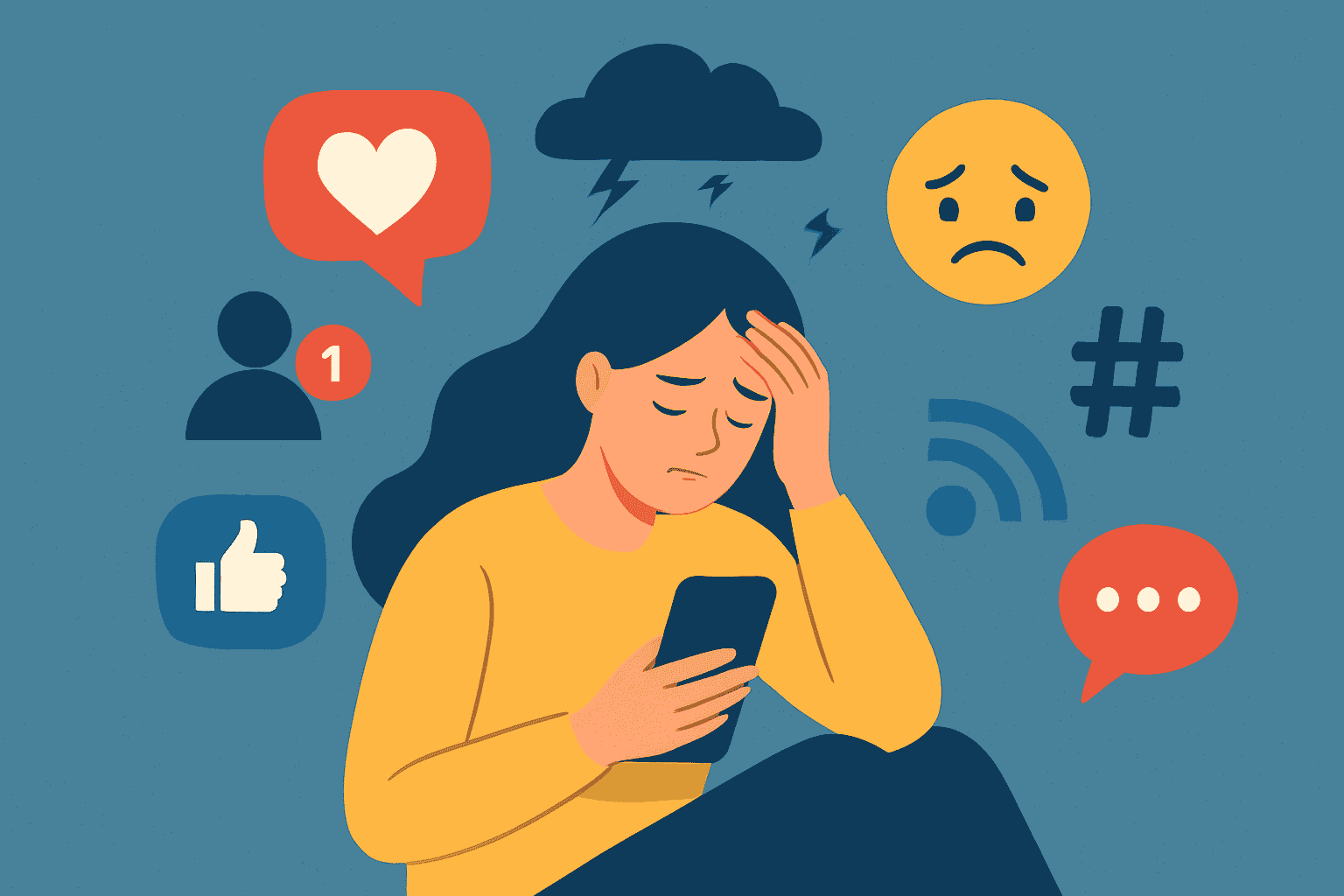
Social media has become a big part of our daily lives. But many people wonder, how can social media affect mental health? This question matters because we spend hours every day scrolling through different apps and platforms.
How can social media affect mental health? It can cause anxiety, depression, and low self esteem. It also leads to sleep problems and addiction. However, it can help people feel connected and find support too.
In this blog post, we will explore both the good and bad effects of social media. You will learn the warning signs and discover practical tips to use social media in a healthier way for better mental wellness.
Table of Contents
- The Scope of Social Media in Our Lives
- Negative Effects of Social Media on Mental Health
- Positive Effects of Social Media on Mental Health
- Warning Signs That Social Media Is Affecting Your Mental Health
- FAQ’s
- Conclusion
The Scope of Social Media in Our Lives
Social media is everywhere today. Most people check their phones within minutes of waking up. Apps like Facebook, Instagram, TikTok, and Twitter have become daily habits for billions of users worldwide.
The average person spends about 2 to 3 hours on social media each day. Young adults and teenagers use it even more. These platforms are designed to keep us scrolling with endless content, notifications, and likes.
Social media connects us instantly. But it also takes up a large portion of our time and attention. Understanding how much we use these apps is the first step to recognizing their impact on our minds.
Negative Effects of Social Media on Mental Health
Social media can harm our mental health in many ways. While it helps us stay connected, too much use can create serious problems. Let’s look at the main negative effects.
Comparison and Low Self-Esteem
Social media makes us compare our lives with others constantly. This habit can damage our confidence and happiness.
Key problems include:
- People only share their best moments online, creating a false reality
- We feel our lives are boring or not good enough compared to others
- Body image issues arise from seeing perfect photos and videos
- FOMO (Fear of Missing Out) makes us feel left behind
- Constant comparisons lead to feelings of jealousy and inadequacy
- Self worth becomes tied to likes, comments, and followers
Anxiety and Depression
Heavy social media use is linked to increased anxiety and depression, especially among young people.
Common issues are:
- Feeling sad or empty after scrolling through feeds
- Worrying too much about what others think of your posts
- Getting upset when posts don’t get enough likes or comments
- Experiencing cyberbullying or mean comments online
- Feeling lonely even while being connected to hundreds of people
- Developing social media anxiety about staying active on platforms
Sleep Disruption
Using social media before bed can ruin your sleep quality and schedule.
Sleep problems include:
- Blue light from screens tricks your brain into staying awake
- Late night scrolling keeps you up past your bedtime
- Checking notifications interrupts your sleep cycle
- Poor sleep leads to mood swings and irritability
- Lack of rest makes anxiety and depression worse
- Tired minds struggle to handle daily stress
Addiction and Dopamine Response
Social media apps are designed to be addictive. They trigger pleasure chemicals in your brain.
Signs of addiction:
- Checking your phone first thing in the morning
- Feeling anxious when you cannot access social media
- Spending more time online than with real people
- Ignoring work, school, or responsibilities to scroll
- Using social media to escape negative feelings
- Getting defensive when someone mentions your usage
Information Overload and Doom Scrolling
Too much information can overwhelm your mind and create stress.
Negative patterns include:
- Endless scrolling through negative news and posts
- Feeling mentally exhausted from too much content
- Getting stuck reading upsetting stories for hours
- Difficulty focusing on important tasks
- Feeling hopeless about world events
- Mental burnout from constant information exposure
These negative effects show why we need to be careful about how we use social media. Awareness is the first step toward healthier habits.
Positive Effects of Social Media on Mental Health
Social media is not all bad. When used wisely, it can actually support our mental health and wellbeing. Let’s explore the positive ways social media helps us.
Connection and Community Building
Social media helps us stay close to people we care about, no matter where they live.
Benefits include:
- Keeping in touch with family and friends easily
- Reconnecting with old friends from school or work
- Finding people who share similar interests and hobbies
- Joining support groups for specific challenges or conditions
- Feeling less lonely, especially for people in remote areas
- Building meaningful friendships with people worldwide
Access to Mental Health Resources
Social media platforms provide valuable information and support for mental health issues.
Helpful resources are:
- Educational posts about anxiety, depression, and other conditions
- Mental health experts sharing tips and advice
- Online therapy services and counseling options
- Crisis helplines and emergency support information
- Personal stories that reduce shame around mental health
- Free resources and coping strategies anyone can use
Self-Expression and Creativity
Social media gives everyone a platform to share their thoughts, art, and ideas freely.
Creative benefits include:
- Sharing your artwork, writing, music, or other talents
- Building confidence through positive feedback and encouragement
- Finding your voice and expressing your true self
- Connecting with others who appreciate your creativity
- Discovering new hobbies and learning new skills
- Feeling proud of what you create and share
Awareness and Advocacy
Social media spreads important messages about mental health to millions of people quickly.
Positive impacts are:
- Mental health campaigns reach large audiences fast
- Breaking the stigma around seeking help for mental issues
- Raising awareness about different mental health conditions
- Supporting others by sharing personal recovery stories
- Creating movements that demand better mental health care
- Educating people who might not understand mental health
Social media can be a powerful tool for good. The key is finding balance and using these platforms in ways that genuinely support your mental wellbeing.
Warning Signs That Social Media Is Affecting Your Mental Health
Knowing when social media hurts your mental health is important. Here are clear signs you should watch for in yourself.
Feeling Sad or Anxious After Using Social Media
Do you feel worse after scrolling through your feeds? If you notice sadness, anxiety, or anger after using social media, this is a red flag. Your mood should not drop every time you check your apps.
Comparing Yourself to Others Constantly
You keep thinking about how others look better, have more fun, or live better lives. This constant comparison steals your happiness and makes you feel inadequate about your own life.
Neglecting Real Life Relationships
You spend more time on your phone than talking to family or friends in person. You ignore people around you to check notifications. Your real world connections start suffering because of screen time.
Having Trouble Sleeping
You scroll late into the night and cannot fall asleep easily. You wake up tired because you stayed up looking at your phone. Your sleep schedule is completely disrupted by social media habits.
Losing Interest in Hobbies and Activities
Things you used to enjoy no longer interest you. You would rather scroll through feeds than do activities you once loved. Social media takes up time you used to spend on meaningful hobbies.
Feeling Jealous or Upset About Likes and Comments
You feel bad when your posts do not get enough likes. You compare your engagement with others and feel disappointed. Your self worth depends on online validation from strangers.
If you notice several of these warning signs, it is time to make changes. Your mental health matters more than any social media platform.Retry
FAQ’s
Social media does not directly cause depression, but heavy use increases the risk. It can trigger depressive symptoms through comparison, cyberbullying, and isolation from real world connections.
Experts recommend limiting social media to 30 minutes to 1 hour per day. Less than 2 hours daily is considered reasonable for maintaining good mental health and balance.
Signs include checking your phone constantly, feeling anxious without access, neglecting responsibilities, losing sleep, and being unable to reduce usage despite trying multiple times to cut back.
Yes, teenagers and young adults are most vulnerable. Their brains are still developing, making them more sensitive to social comparison, peer pressure, and the addictive features of platforms.
Parents should set clear time limits, have open conversations about online experiences, monitor activity appropriately, encourage offline hobbies, and model healthy social media habits themselves.
Conclusion
In conclusion, understanding how can social media affect mental health is crucial in today’s digital world. We have seen that social media brings both benefits and challenges to our mental wellbeing. It can cause anxiety, depression, and low self esteem, but it also helps us connect and find support.
The key is finding balance and using these platforms mindfully. Pay attention to warning signs and take action when needed. Set healthy boundaries, limit your screen time, and prioritize real life connections. Remember, you control social media, not the other way around. Take charge of your digital life for better mental health today.

Ajay Rathod is a fitness enthusiast with several years of hands-on experience in home workouts, strength training, and beginner fitness programs. He researches evidence-based fitness practices and simplifies them for everyday people.