
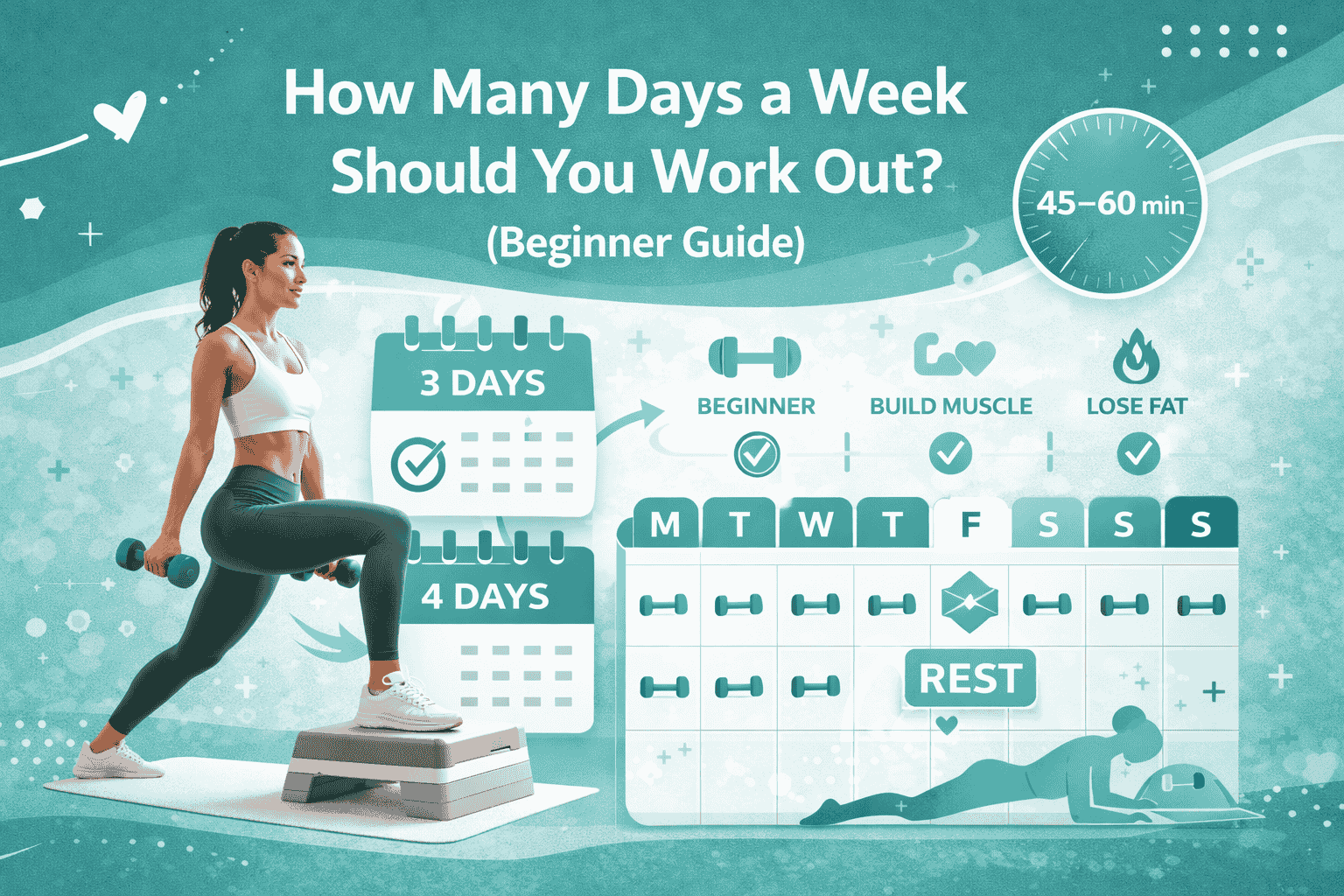
Starting a workout routine is exciting. But one question stops many beginners: how many days should you workout each week?
The answer is not the same for everyone. Your age, fitness level, and goals all matter.
This guide will help you find the right workout frequency for your body and lifestyle.
Table of Contents
- Why Workout Frequency Matters
- How Many Days Should You Workout Based on Fitness Level
- Workout Frequency by Age
- Choosing Workout Days Based on Your Goals
- Why Rest Days Are Essential
- How to Structure Your Week
- Common Mistakes to Avoid
- Tips for Success
- Important Fitness Disclaimer
- FAQ’s: Common Questions About Workout Frequency
- Final Thoughts
Why Workout Frequency Matters
Working out too little won’t give you results. Working out too much can hurt your body and slow your progress.
The right balance helps you:
- Build strength safely
- Avoid injuries
- Stay motivated
- See real results
- Recover properly
How Many Days Should You Workout Based on Fitness Level
Complete Beginners
If you are just starting, your body needs time to adjust.
Recommended frequency: 2 to 3 days per week
Start slow and focus on learning proper form. Your muscles are not used to exercise yet. They need extra recovery time.
Give yourself at least one full day of rest between workouts. This lets your body heal and get stronger.
Intermediate Level
You have been working out for a few months. Your body feels stronger and recovers faster.
Recommended frequency: 3 to 5 days per week
At this stage, you can add more variety. Try different types of exercise. Mix cardio with strength training.
You still need rest days. But you can work out more often because your body adapts faster.
Advanced Level
You have been training regularly for over a year. You know your body well.
Recommended frequency: 4 to 6 days per week
Advanced exercisers can handle more volume. But even experts need rest. Listen to your body and take breaks when needed.
Workout Frequency by Age
Age affects how quickly your body recovers. Here’s what to consider:
Ages 18 to 30
Your body recovers quickly at this age. You can handle more frequent workouts.
- Start with 3 days per week
- Build up to 5 days as you get stronger
- Focus on building good habits
Ages 31 to 50
Recovery takes a bit longer now. Balance is key.
- Aim for 3 to 4 days per week
- Include stretching and mobility work
- Pay attention to joint health
Ages 51 and Above
Your body needs more recovery time. That’s completely normal.
- Start with 2 to 3 days per week
- Focus on low impact activities
- Include balance and flexibility exercises
- Consider activities like walking, swimming, or yoga
Choosing Workout Days Based on Your Goals
Your goals change how often you should workout. Here’s a simple breakdown:
Weight Loss Goals
Recommended: 4 to 5 days per week
Combine cardio and strength training. This helps burn calories and build muscle. Muscle burns more calories even when you rest.
Sample week:
- Monday: Cardio (30 minutes)
- Tuesday: Strength training
- Wednesday: Rest or light walk
- Thursday: Cardio (30 minutes)
- Friday: Strength training
- Weekend: One active day, one rest day
Building Muscle
Recommended: 3 to 4 days per week
Focus on strength training. Your muscles grow during rest, not during workouts.
Give each muscle group at least 48 hours to recover before working it again.
General Fitness and Health
Recommended: 3 to 4 days per week
Mix different activities. Include cardio, strength, and flexibility work.
This keeps exercise fun and works your whole body.
Improving Heart Health
Recommended: 4 to 5 days per week
Focus on moderate cardio activities. Walking, cycling, and swimming are great choices.
You don’t need intense workouts. Consistency matters more than intensity.
Why Rest Days Are Essential
Rest days are not lazy days. They are when your body gets stronger.
What happens during rest:
- Muscles repair and grow
- Energy stores refill
- Your mind recovers
- Risk of injury drops
- Motivation stays high
Signs You Need More Rest
Watch for these warning signs:
- Extreme tiredness that won’t go away
- Workouts feel much harder than usual
- Trouble sleeping
- Getting sick more often
- Mood changes or irritability
- Decreased performance
If you notice these signs, take extra rest days. Your body is telling you something important.
How to Structure Your Week
Here are three sample weekly plans:
Beginner Plan (3 Days)
- Monday: Full body workout (30 minutes)
- Tuesday: Rest
- Wednesday: Cardio (20 minutes)
- Thursday: Rest
- Friday: Full body workout (30 minutes)
- Weekend: Rest or gentle walking
Intermediate Plan (4 Days)
- Monday: Upper body strength
- Tuesday: Cardio (30 minutes)
- Wednesday: Rest
- Thursday: Lower body strength
- Friday: Rest
- Saturday: Full body or cardio
- Sunday: Rest
Active Plan (5 Days)
- Monday: Strength training
- Tuesday: Cardio
- Wednesday: Strength training
- Thursday: Active rest (yoga or walking)
- Friday: Cardio
- Weekend: One workout day, one complete rest day
Common Mistakes to Avoid
Doing too much too soon: Your enthusiasm is great. But starting with six days a week often leads to burnout or injury.
Skipping rest days: More is not always better. Your body needs time to recover and adapt.
Ignoring pain: Soreness is normal. Sharp pain is not. Stop and rest if something hurts.
Following extreme routines: Social media shows intense daily workouts. Most people don’t need that level of training.
Tips for Success
Start small: Begin with fewer days and add more slowly. This builds a lasting habit.
Schedule your workouts: Treat them like important appointments. Write them in your calendar.
Listen to your body: Some days you need rest more than exercise. That’s okay.
Stay consistent: Regular moderate exercise beats occasional intense workouts.
Make it enjoyable: Choose activities you actually like. You’ll stick with them longer.
Important Fitness Disclaimer
Please read carefully:
This article provides general information only. It is not medical advice. Always consult your doctor before starting any new exercise program, especially if you:
- Have any health conditions
- Take medications
- Are pregnant or nursing
- Have had injuries
- Haven’t exercised in a long time
- Are over 45 years old (men) or 55 years old (women)
Stop exercising immediately if you feel chest pain, severe shortness of breath, dizziness, or unusual discomfort. Seek medical attention right away.
Every person is different. What works for others may not work for you. A qualified fitness professional or healthcare provider can give you personalized advice for your specific situation.
FAQ’s: Common Questions About Workout Frequency
You can do some activity daily, but not intense workouts every day. Your body needs rest to recover. Try alternating hard workout days with easy activity days like walking or stretching.
Yes, three days per week is enough for most beginners. You will see improvements in strength, fitness, and health. Consistency matters more than frequency.
A rest day means no intense exercise. You can still do light activities like gentle walking, stretching, or easy yoga. Complete rest is also fine.
Beginners should aim for 30 to 45 minutes per session. Quality matters more than length. A focused 30 minute workout beats a distracted hour.
Yes, you can combine them. Many people do strength training first, then cardio. Keep both sessions moderate if doing them together.
Don’t worry. Life happens. Just continue with your next scheduled workout. Never try to “make up” for missed days by doing extra workouts. This increases injury risk.
Light soreness is okay. You can do gentle exercise or work different muscle groups. If you have severe soreness or pain, take a rest day.
Final Thoughts
The question of how many days should you workout depends on you. Your age, fitness level, and goals all play a role.
For most beginners, 3 to 4 days per week is perfect. This gives you results without overwhelming your body or schedule.
Remember that rest days are part of your training, not breaks from it. Your body gets stronger during recovery.
Start where you are. Be consistent. Listen to your body. The best workout frequency is the one you can maintain long term.
Your fitness journey is personal. Take it at your own pace and celebrate every step forward.

Ajay Rathod is a fitness enthusiast with several years of hands-on experience in home workouts, strength training, and beginner fitness programs. He researches evidence-based fitness practices and simplifies them for everyday people.