
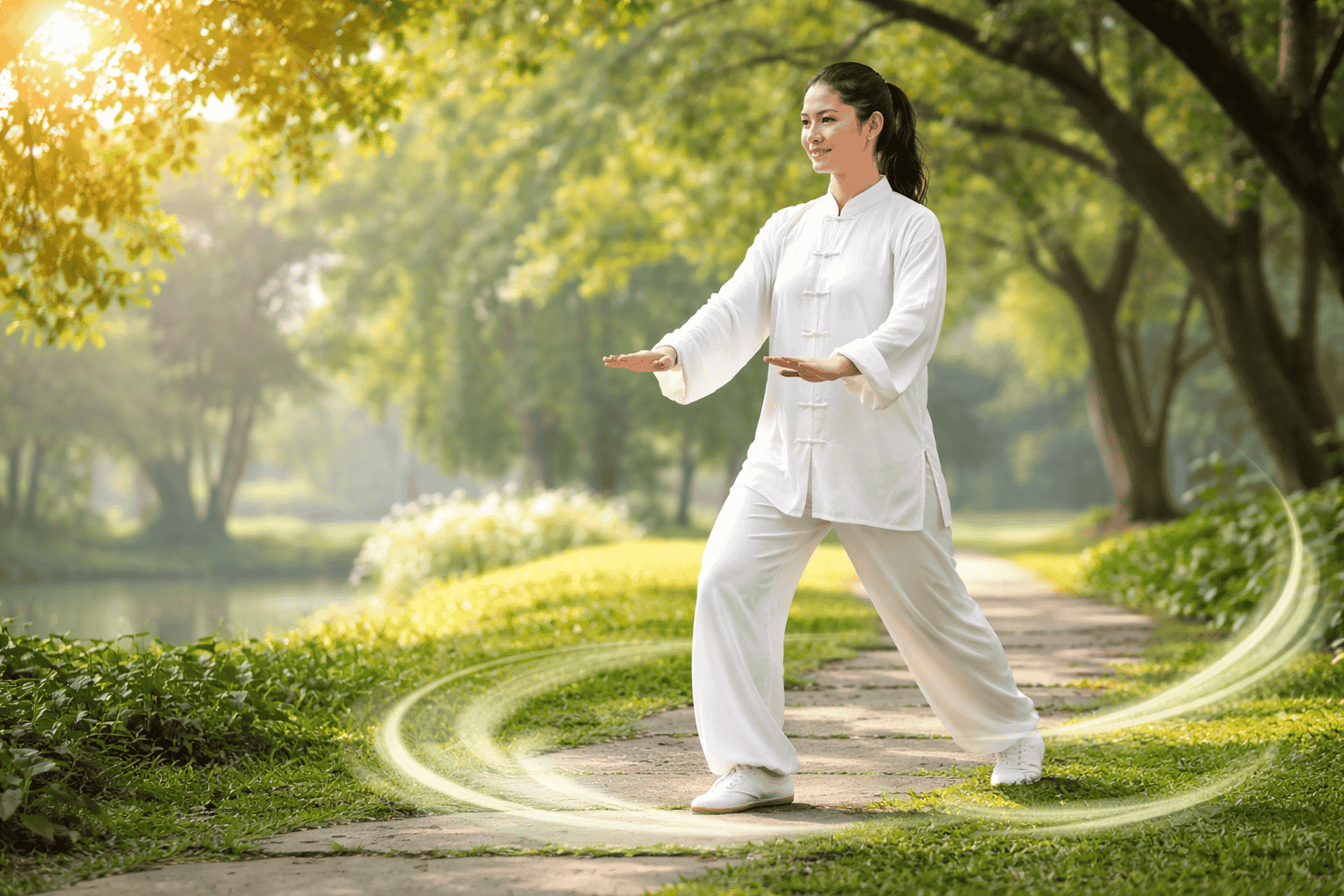
Looking for a gentle way to boost your health and find inner peace? Tai Chi Walking combines ancient wisdom with modern wellness needs. This complete guide shows you everything about this mindful practice.
Tai Chi Walking is a slow, meditative movement that blends traditional Tai Chi principles with walking. It focuses on balance, breath control, and body awareness while moving forward with purpose and calm.
Whether you’re a senior seeking better balance or someone wanting stress relief, this practice offers amazing benefits. Let’s explore how Tai Chi Walking can transform your daily routine and overall wellbeing.
Table of Contents
- What is Tai Chi Walking?
- The Science and Benefits of Tai Chi Walking
- How to Practice Tai Chi Walking: Step-by-Step Guide
- Common Mistakes to Avoid
- Tai Chi Walking vs. Regular Walking vs. Traditional Tai Chi
- FAQ’s
- Conclusion
What is Tai Chi Walking?
Tai Chi Walking is a mindful exercise that combines walking with Tai Chi movements. It brings together slow, controlled steps with deep breathing and focused attention.
This practice comes from ancient Chinese martial arts. However, it’s much simpler than traditional Tai Chi forms. You move forward while staying present in each moment.
The key is moving slowly and deliberately. Each step is done with full awareness. You shift your weight carefully from one foot to the other.
It’s like meditation in motion. Your mind stays calm while your body moves gently. This creates a perfect balance between physical activity and mental peace.
The Science and Benefits of Tai Chi Walking
Tai Chi Walking offers powerful benefits for both body and mind. Research shows this gentle practice can improve your health in many ways. Let’s explore what science says about this amazing exercise.
Physical Health Benefits
Your body gets stronger and more balanced with regular practice. Tai Chi Walking works on multiple physical aspects at once.
Better balance and stability top the list. Studies show older adults who practice have fewer falls. Your legs become stronger while your coordination improves naturally.
Joint health gets a boost too. The slow movements are easy on your knees and hips. Unlike running or jogging, there’s no harsh impact on your body.
Your posture improves over time. You learn to stand tall and walk with proper alignment. This reduces back pain and muscle tension throughout the day.
Blood circulation increases during practice. Your heart rate rises gently, giving cardiovascular benefits. It’s perfect for people who can’t do intense workouts.
Mental and Emotional Benefits
Your mind becomes calmer and clearer. Tai Chi Walking acts as moving meditation that reduces daily stress.
Anxiety levels drop significantly with regular practice. The focused breathing activates your body’s relaxation response. Many people feel more peaceful after just one session.
Mental clarity and focus improve naturally. You train your brain to stay present in the moment. This helps with concentration in other areas of life too.
Sleep quality gets better for most practitioners. The calming effect carries into nighttime. Your body and mind relax more easily at bedtime.
Scientific Research
Multiple studies support these benefits. A 2019 research study found Tai Chi practices improve balance in seniors by 40%. Another study showed reduced stress hormones after eight weeks of practice.
Brain scans reveal increased activity in areas controlling attention and body awareness. This explains why practitioners feel more connected to their bodies.
The combination of movement, breathing, and mindfulness creates unique results. No single element works as well alone. Together, they transform your overall wellbeing.
How to Practice Tai Chi Walking: Step-by-Step Guide
Here is the step by step guide on how to practice tai chi walking:
Step 1: Find Your Starting Position
Stand with feet shoulder width apart. Keep your knees slightly bent, not locked. Relax your shoulders and let arms hang naturally by your sides.
Step 2: Center Your Body
Close your eyes briefly. Take three deep breaths. Feel your weight distributed evenly on both feet. This is your grounding moment.
Step 3: Begin Your First Step
Shift your weight slowly to your right foot. Lift your left foot just an inch off the ground. Move it forward slowly, placing heel down first.
Step 4: Complete the Weight Transfer
Roll your left foot from heel to toe. Gradually shift your weight forward onto the left foot. Take 3 to 5 seconds for this complete transfer.
Step 5: Coordinate Your Arms
As you step forward, raise your arms gently. Keep elbows soft and relaxed. Hands float up naturally to waist or chest height.
Lower your arms as you complete each step. The movement should feel smooth and flowing, not jerky or forced.
Step 6: Sync Your Breathing
Breathe in as you lift and move your foot forward. Breathe out as you place weight down and complete the step. Keep breathing slow and natural.
Step 7: Maintain Mindful Awareness
Focus on how your body feels with each movement. Notice the shift of weight, the touch of ground, the flow of breath. Let other thoughts drift away.
Step 8: Continue Walking
Repeat the same process with your right foot. Keep your pace very slow and deliberate. Each step takes several seconds to complete.
Common Mistakes to Avoid
Here are some common mistakes to avoid while doing tai chi walking:
Walking Too Fast
This isn’t regular walking. Slow down much more than feels natural at first. Speed defeats the purpose of mindfulness.
Holding Your Breath
Many beginners forget to breathe naturally. Remember to match breath with movement. Never hold or force your breathing.
Tensing Your Body
Keep shoulders relaxed and jaw loose. Tension blocks the flow of energy. Check your body regularly for tightness.
Looking Down Constantly
Gaze forward softly, not down at your feet. Your head should stay level. This improves balance and posture.
Tips for Perfect Form
Keep your spine straight but not stiff. Imagine a string pulling gently upward from the top of your head.
Your steps should feel like you’re walking through water. Everything moves with resistance and awareness.
Practice for just 5 to 10 minutes when starting. Build up time gradually as you get comfortable with the movements.
Focus on quality over quantity. Three mindful steps beat thirty rushed ones every time.
Tai Chi Walking vs. Regular Walking vs. Traditional Tai Chi
Understanding the differences helps you choose the right practice for your needs. Here’s a simple comparison of all three methods.
| Feature | Tai Chi Walking | Regular Walking | Traditional Tai Chi |
|---|---|---|---|
| Speed | Very slow and deliberate | Moderate to fast pace | Very slow, stationary |
| Movement | Forward walking with awareness | Natural walking motion | Fixed positions and forms |
| Difficulty | Easy for beginners | Very easy | Moderate to difficult |
| Space Needed | Walking path or hallway | Any walking area | Small fixed space |
| Time Required | 5 to 20 minutes | 20 to 60 minutes | 20 to 45 minutes |
| Focus | Breath and walking steps | Fitness and distance | Complex movement sequences |
| Learning Curve | Quick to learn | No learning needed | Takes months to master |
| Mindfulness Level | High focus required | Low to moderate | Very high focus |
| Physical Intensity | Low impact, gentle | Moderate impact | Low impact, controlled |
| Best For | Balance, meditation, beginners | Cardio fitness, weight loss | Full mind-body practice |
Pick Tai Chi Walking if you want mindfulness with movement. It’s perfect for those who find regular Tai Chi too complex or regular walking too rushed.
Choose regular walking for cardiovascular fitness and burning calories. It’s great when you need faster results or higher intensity exercise.
Select traditional Tai Chi for deep practice and learning complete forms. It offers the fullest experience but requires more commitment and patience.
FAQ’s
Yes, it’s excellent for seniors. The slow, controlled movements improve balance and prevent falls. It’s gentle on joints and builds strength safely without strain or risk.
Tai Chi Walking burns fewer calories than regular walking. However, it reduces stress eating and improves metabolism. Combine it with healthy eating and other exercises for weight loss.
Key benefits include better balance, reduced stress, improved focus, and stronger legs. It also enhances joint flexibility, promotes better sleep, and creates mental calmness throughout your day.
Start with 5 to 10 minutes daily as a beginner. Gradually increase to 15 or 20 minutes. Consistency matters more than duration for getting results.
Conclusion
Tai Chi Walking offers a beautiful path to better health and inner peace. This ancient practice brings together movement, breath, and mindfulness in one simple exercise.
You don’t need special skills or equipment to start. Just take your first slow, mindful step today. Even five minutes of practice can make a difference in how you feel.
Whether you’re seeking better balance, stress relief, or gentle exercise, Tai Chi Walking delivers real results

Ajay Rathod is a fitness enthusiast with several years of hands-on experience in home workouts, strength training, and beginner fitness programs. He researches evidence-based fitness practices and simplifies them for everyday people.