
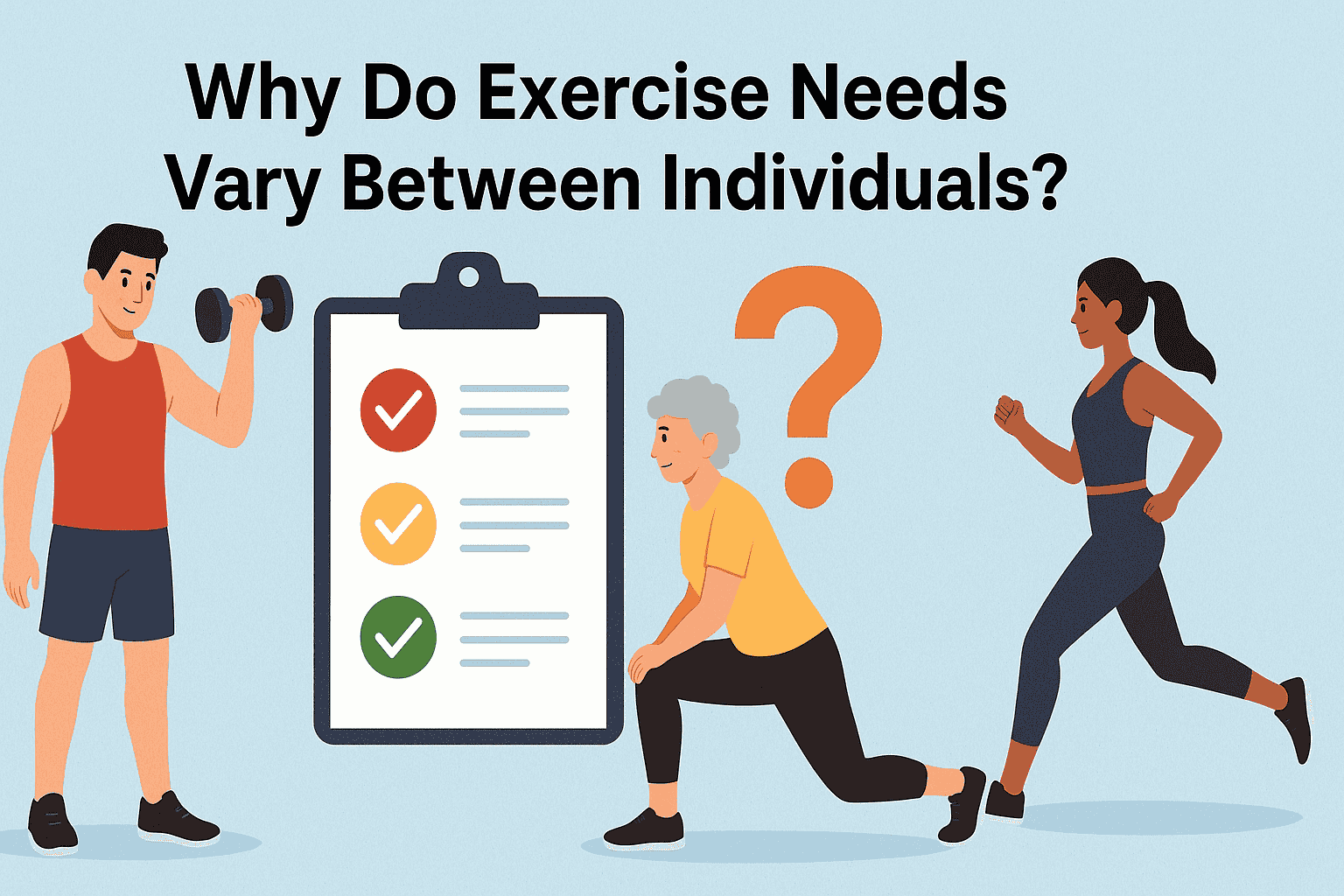
Why do exercise needs vary between individuals? This question puzzles many fitness enthusiasts. Everyone’s body responds differently to workouts. Understanding these differences helps you create a better fitness plan that actually works for your unique needs.
Exercise needs vary between individuals because of age, genetics, fitness level, health conditions, and personal goals. Your lifestyle, body type, and daily activities also play important roles. What works perfectly for one person may not suit another at all.
This blog explores all factors that make your exercise requirements unique. You will learn how to identify your personal needs. By the end, you can design a workout routine that matches your body and lifestyle perfectly.
Table of Contents
- Understanding Individual Exercise Needs
- Key Factors That Influence Exercise Needs
- How These Factors Shape Personal Exercise Plans
- Benefits of Personalized Exercise Programs
- Common Mistakes to Avoid
- Conclusion
Understanding Individual Exercise Needs
Every person has a unique body with different requirements. Your exercise needs depend on many personal factors. What helps your friend lose weight might not work the same way for you.
Your body’s response to exercise is shaped by your genes, age, and current health. Some people build muscle quickly while others need more time. Recovery time after workouts also differs from person to person.
Knowing your individual needs helps you avoid frustration and injuries. You can set realistic goals that match your abilities. This understanding makes your fitness journey more enjoyable and successful in the long run.
Key Factors That Influence Exercise Needs
Multiple factors determine how much and what type of exercise you need. Understanding these elements helps you create the right workout plan for yourself.
1. Age and Life Stage
Your age plays a major role in deciding your exercise needs.
Children and Teens need at least 60 minutes of active play daily. Their growing bodies require movement for proper development. High energy activities like running and jumping are perfect for them.
Adults (18 to 64 years) should aim for 150 minutes of moderate exercise weekly. This can include brisk walking, cycling, or swimming. Strength training twice a week is also important.
Seniors (65 and above) need gentler exercises that focus on balance and flexibility. Walking, yoga, and light resistance training work well. They should also include activities that prevent falls.
2. Current Fitness Level
Your starting point matters a lot in planning workouts.
Beginners should start slow with basic exercises. Your body needs time to adapt to new movements. Pushing too hard too soon leads to injuries and burnout.
Intermediate exercisers can handle moderate intensity workouts. You can add variety and increase duration gradually. Your body recovers faster than beginners.
Advanced fitness enthusiasts need challenging workouts to see progress. Your body has adapted to regular exercise. You require higher intensity and specialized training programs.
3. Body Type and Genetics
Your natural body composition affects how you respond to exercise.
Ectomorphs have lean bodies and fast metabolism. They may need more calories and strength training. Building muscle takes longer for this body type.
Mesomorphs gain muscle easily and have athletic builds. They respond well to most types of exercise. Both cardio and strength training work effectively.
Endomorphs tend to store fat more easily. They benefit from regular cardio combined with strength training. Managing diet becomes equally important alongside exercise.
Genetics also determines your muscle fiber type. Some people naturally excel at endurance activities. Others are better suited for power and strength exercises.
4. Health Conditions and Medical History
Existing health issues require modified exercise approaches.
Heart conditions need doctor approved exercise plans. Start with low intensity activities. Monitor your heart rate during workouts carefully.
Diabetes patients benefit from regular physical activity. Exercise helps control blood sugar levels. Timing meals and workouts together is important.
Joint problems like arthritis require low impact exercises. Swimming and cycling are easier on joints. Avoid high impact activities that cause pain.
Asthma sufferers should warm up properly before exercising. Keep rescue inhalers nearby during workouts. Choose activities that don’t trigger breathing problems.
Always consult your doctor before starting new exercise programs if you have any medical conditions.
5. Personal Goals and Objectives
What you want to achieve shapes your exercise routine.
Weight loss goals require a mix of cardio and strength training. You need to burn more calories than you consume. Consistency matters more than intensity.
Muscle building goals focus on resistance training. You need progressive overload to grow muscles. Protein intake and recovery become crucial.
Athletic performance goals demand sport specific training. Your workouts should match your competition requirements. Skill practice combines with fitness training.
General health maintenance needs balanced moderate activity. Walking, light jogging, and basic exercises work well. The focus stays on staying active regularly.
6. Lifestyle and Daily Activity
Your everyday routine affects exercise requirements.
Desk jobs mean you sit most of the day. You need more structured exercise to compensate. Taking movement breaks throughout the day helps too.
Physical jobs already involve lots of activity. Construction workers or nurses move constantly. They may need less additional exercise but should focus on recovery.
Sleep patterns impact your energy levels for workouts. Poor sleep means your body needs more recovery time. Quality sleep improves exercise performance greatly.
Stress levels influence how much exercise you can handle. High stress periods require gentler workouts. Exercise itself helps manage stress effectively.
7. Gender Differences
Men and women have different physiological needs.
Men typically have more muscle mass naturally. They can lift heavier weights from the start. Testosterone helps with faster muscle recovery.
Women have different hormonal cycles that affect energy. Period weeks may require lighter workouts. Women also carry weight differently than men.
Both genders need strength and cardio training. The intensity and specific focus may vary. Neither gender is better or worse at exercise overall.
How These Factors Shape Personal Exercise Plans
All these factors work together to create your unique exercise needs. No single factor works alone. Your age combines with your fitness level and health conditions to determine the right workout plan.
For example, a 25 year old beginner needs a different plan than a 50 year old beginner. A person with diabetes follows different guidelines than someone with joint pain. Your body type affects how quickly you see results from different exercises.
Understanding these connections helps you make smart choices. You can pick exercises that match multiple factors at once. A busy office worker with back pain needs low impact exercises that fit a tight schedule.
The goal is finding balance between all your personal factors. This creates a sustainable workout routine. When your exercise plan matches your real life situation, you stick with it longer and see better results.
Benefits of Personalized Exercise Programs
Creating a workout plan that matches your individual needs brings many advantages. Here are the key benefits you gain from personalized exercise programs.
Better Results in Less Time
Personalized plans focus on what works for your body. You don’t waste time on exercises that don’t suit you. Every workout moves you closer to your specific goals. This targeted approach delivers faster and more visible results.
Reduced Risk of Injury
Generic workout plans often push people too hard or too fast. A personalized program respects your current fitness level. It considers your past injuries and physical limitations. This careful approach keeps you safe while exercising.
Increased Motivation and Consistency
You enjoy workouts more when they match your preferences. Personalized plans include activities you actually like doing. This makes sticking to your routine much easier. Higher enjoyment leads to better long term commitment.
Improved Overall Health
Tailored exercise programs address your specific health concerns. They work with your medical conditions instead of against them. You can manage chronic issues more effectively. Your overall wellness improves in a sustainable way.
Flexibility and Adaptability
Personal plans can change as your life changes. Busy weeks get lighter workout schedules. Recovery periods adjust based on how you feel. This flexibility prevents burnout and keeps you going.
Better Mind Body Connection
You learn to listen to your body’s signals. Personalized training teaches you what feels right. You understand your limits and capabilities better. This awareness helps in all areas of life.
Cost Effective Fitness
You invest time and energy in methods that actually work. No more jumping between random workout trends. Fewer injuries mean lower medical costs. Smart personalization saves money in the long run.
Common Mistakes to Avoid
Many people make similar errors when planning their exercise routines. Avoiding these mistakes helps you stay safe and reach your goals faster.
Following Someone Else’s Plan Blindly
Your favorite fitness influencer’s workout may not suit you. What works for your friend might cause you injury. Every body responds differently to exercise programs. Always adapt any plan to match your personal needs and limitations.
Ignoring Your Current Fitness Level
Starting too intense leads to quick burnout. Beginners often try advanced workouts right away. This causes unnecessary pain and discouragement. Always begin at your actual fitness level and progress slowly.
Skipping Rest and Recovery Days
More exercise does not always mean better results. Your muscles grow and strengthen during rest periods. Overtraining leads to fatigue and injuries. Schedule rest days as part of your workout plan.
Comparing Yourself to Others
Everyone progresses at their own pace. Comparing creates unrealistic expectations and frustration. Focus on your personal improvement instead. Celebrate your own small victories along the way.
Not Listening to Your Body
Pain is your body’s warning signal. Pushing through real pain causes serious injuries. Learn the difference between discomfort and pain. Stop exercising if something feels wrong.
Conclusion
In conclusion, why do exercise needs vary between individuals is now clear to you. Your age, fitness level, body type, health conditions, and personal goals all play important roles. These factors make your exercise requirements unique and different from others.
Creating a personalized workout plan gives you better results and fewer injuries. Avoid common mistakes like copying others or pushing too hard. Listen to your body and adjust your routine as needed.
Start where you are right now. Progress at your own pace. Remember that your fitness journey is personal and unique to you alone.

Ajay Rathod is a fitness enthusiast with several years of hands-on experience in home workouts, strength training, and beginner fitness programs. He researches evidence-based fitness practices and simplifies them for everyday people.